What Small Businesses Need to Know About Commercial Door Security
Securing a commercial property involves more than just locking the front door at night. For small business owners, the entry points are the most visible part of the security system, but they can also be the weakest if not properly maintained. A commercial door that looks sturdy may still have vulnerabilities in its lock, frame, or access schedule. Understanding what to check and when to upgrade can save a business from theft, liability, and costly downtime.
Assess the Lock Type and Grade
The first thing to verify is whether the lock installed on each exterior commercial door is appropriate for the level of traffic and security needed. Many older buildings still rely on residential-grade locks that are easier to pick or force open. Commercial locks are graded differently, with Grade 1 being the most durable and secure. A business lock installation should always specify Grade 1 or Grade 2 hardware for exterior doors. Check the lock body, strike plate, and the screws holding everything together. Often, the weakest point is not the lock itself but the cheap screws or a strike plate that can be pried away with a simple tool.
Inspect the Door and Frame Condition
A lock is only as good as the door it is mounted on. Check for rot, rust, or damage around the frame, especially near the latch area. If the wood is soft or the metal frame is bent, a lockset cannot provide proper security. Also check for gaps between the door and the frame. A gap wider than a credit card can allow someone to slip a tool inside and manipulate the latch. For metal or glass doors, verify that the frame is securely anchored to the wall structure, not just to the drywall or trim.
Verify the Key Control System
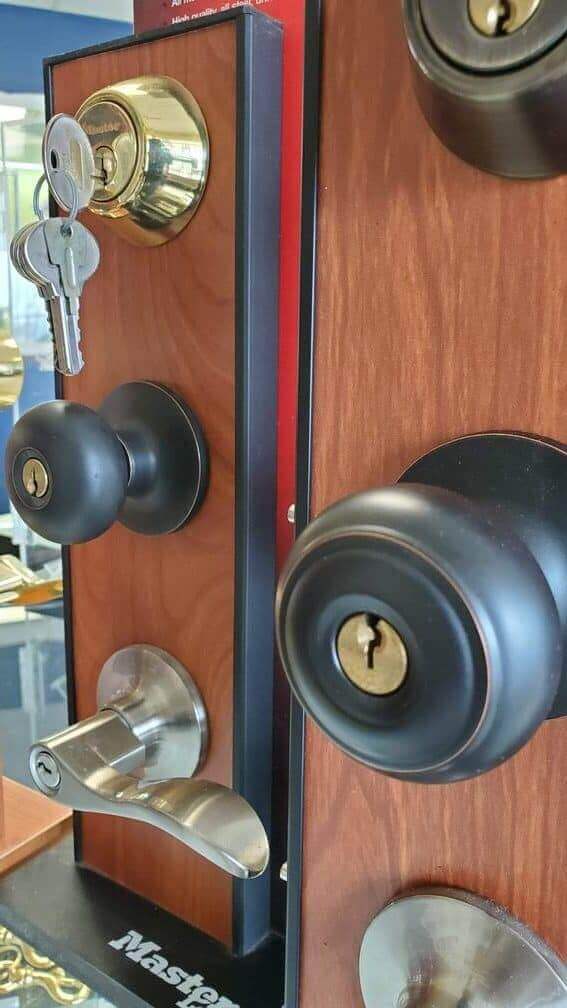
Many small businesses start with a simple key system that gets copied and shared over time. This creates a risk that former employees or others still hold keys to the property. A proper key control system uses restricted key blanks that cannot be duplicated without authorization. A master key system can give the owner access to all areas while limiting staff to only the doors they need. It is worth reviewing who holds keys and whether a key register exists. If keys are scattered or unaccounted for, a rekey or a new lock installation should be a priority.
Evaluate the Exit Devices and Panic Hardware
For businesses with high foot traffic or public access, exit devices are a legal requirement in most jurisdictions. These are the push bars or crossbars on doors that allow quick exit without a key. They must be tested regularly to ensure they release smoothly and latch securely when the door closes. A malfunctioning exit device can fail during an emergency or leave the door unsecured after hours. Look for signs of wear, such as a bar that sticks or a latch that does not fully engage. Also confirm that the exit device is listed for the door type and that the strike plate alignment is correct.
Review the Access Schedule and Credential System
For businesses that use electronic access control, the access schedule determines when certain doors are unlocked and who can enter. A common mistake is leaving the schedule too permissive, such as keeping all doors unlocked during cleaning hours or allowing entry to former employees whose credentials were never deactivated. Review the schedule regularly and remove any credentials that are no longer needed. For businesses without electronic access, a controlled access for business premises system can be a practical upgrade. It allows the owner to manage entry points remotely and track who comes and goes without changing locks every time a key is lost.
Check the Cabinet and Interior Locks
Security is not only about the front door. Many small businesses store sensitive documents, cash, or inventory in cabinets or drawers that have minimal locks. A basic cabinet lock can be easily bypassed with a paperclip or a screwdriver. Consider upgrading cabinet locks to a keyed-alike system if multiple cabinets need to be secured. For filing cabinets with important records, a lock that uses a restricted key offers better protection. Even a simple lock on a supply closet can prevent unauthorized access to items that could be used to harm the business.
Okey Locksmith is also on YouTube.
Test the Door Closer and Hinges
A door that does not close fully on its own creates a security gap. Check the door closer at the top of the frame. It should pull the door shut firmly without slamming. If it drags or fails to close, the latch may not engage, leaving the door unlocked. Also inspect the hinges. Hinges on the outside are a vulnerability if they are not pinned or if the hinge screws are accessible from the exterior. For outward-swinging doors, make sure the hinge pins are non-removable or that the hinge is installed on the interior side of the door.
Look at the Weather Stripping and Threshold
Weather stripping that is worn or missing can allow a tool to be inserted between the door and the frame. The threshold, or the strip at the bottom of the door, should be secure and in good condition. A damaged threshold can be lifted or removed, giving someone access to the locking mechanism from below. Replace any weather stripping that is cracked or missing, and ensure the threshold is fastened with tamper-resistant screws.
Plan for Routine Maintenance
Security hardware needs regular attention. A maintenance plan that includes lubricating locks, tightening screws, and testing all entry points every few months can prevent small issues from becoming big problems. Many locksmiths offer a service contract for commercial properties that includes periodic inspections. Even without a contract, a business owner can keep a simple checklist and walk the perimeter once a quarter. A well-maintained commercial door system is less likely to fail when it is needed most.
For small businesses in Oklahoma City, having a reliable locksmith who understands commercial security is a practical part of running the operation. Okey Locksmith provides 24/7 mobile automotive, residential, commercial, access control, and emergency locksmith services in Oklahoma City and nearby communities, and is located at 3121 SW 29th St, Oklahoma City, OK 73119, USA, reachable at +1 405-703-8943.